The short version
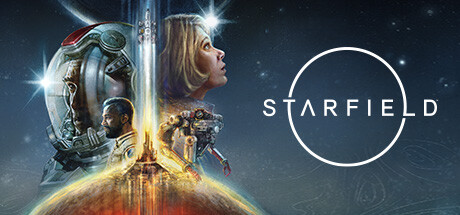
A thousand planets, and the magic is on maybe six of them. Starfield is Bethesda's most technically competent launch and its least soulful world — an enormous, handsome machine that works almost everywhere and sings almost nowhere. Fifty-eight hours gave us real highs, long plateaus, and one persistent question: where did the wandering go?
Story
You're a miner who touches a mysterious artifact, sees the universe, and gets fast-tracked into Constellation, the last society of explorers, to collect the rest of the set. The main quest orbits big ideas — multiverses, faith, what exploration is for — and occasionally lands a genuinely great moment (one mid-game mission involving a colony ship is all-timer Bethesda). But the pacing is a flat line, Constellation's companions are agreeable to the point of anonymity, and the New Game+ conceit, clever on paper, quietly admits that the world isn't worth staying in.
The faction questlines rescue it, as tradition demands. The Crimson Fleet pirate arc and the corporate espionage line for Ryujin are top-shelf Bethesda — real choices, real betrayals, real consequences. The herd's advice: mainline the factions, treat the artifact hunt as a side gig.
Gameplay
The moment-to-moment is the best Bethesda has ever shipped: gunplay finally feels current, zero-G fights are a great wrinkle, and the ship builder is a full LEGO set hiding inside the game — we lost eight hours to it without noticing and regret nothing. Outpost building, cargo routes, and a surprisingly deep skill tree round out a systems suite that should have powered a classic.
What it powers instead is a loop of menus. Space is a fast-travel screen, not a place: you don't fly to planets, you cut to them through four loading transitions. And the thousand-planet promise delivers procedurally scattered rocks where the same eight points of interest repeat with the furniture unmoved. Bethesda's entire legend was built on walking toward a mountain and finding a story on the way; Starfield replaces the walk with a menu and the mountain with a checklist entry. Exploration — the thing this studio invented for a generation — is the single weakest system in its space game.
Frequently beautiful, especially planetside skyboxes and the retro-NASA industrial design, which is a genuinely great aesthetic. Cities look expensive but feel staffed rather than inhabited. Performance at launch was stable if heavy; years of patches and an aggressive mod scene have since smoothed most edges and renovated several rooms.
Craft — 6.9
Individually solid systems — shooting, ship building, faction writing — assembled around a structural mistake: scale chosen over density. The craftsmanship is real; the architecture is wrong.
Hold — 6.1
Fifty-eight hours in, the pull faded mid-second-playthrough. The New Game+ hook is novel exactly once, and without the wanderlust engine, there's no gravity dragging you back. Mods are the long-term life support, and they're doing honest work.
The verdict
One nostril, held with respect rather than affection. Worth playing on a sale for the factions and the ship builder. But somewhere in the menu transitions, Bethesda's oldest magic trick — the horizon that pulls you toward it — got lost in space.