The short version
Eight years of waiting, memes, and Silksong-in-every-Direct jokes — answered with a game that is faster, crueller, and more generous than its legend demanded. Team Cherry didn't make Hollow Knight again. They made its ambitious, sharp-elbowed sister, and the herd hasn't stopped rooting through it since launch day.
Story
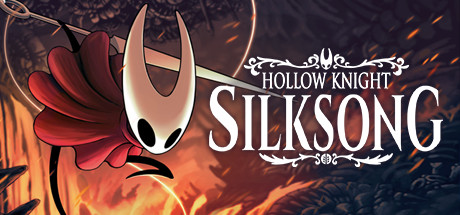
Hornet — the needle-wielding rival from the first game — is dragged in chains to the kingdom of Pharloom, a land ruled from a shining citadel at the top of the map. That single geographic decision inverts everything: where Hollow Knight sent you burrowing down into the dark, Silksong is a pilgrimage upward, and the climb is baked into the storytelling. Every bug you meet is on the same pilgrimage, and watching the road change them (or finish them) gives the world a quiet melancholy that sneaks up on you between boss fights.
Hornet herself talks, which the Knight never did, and it changes the flavor completely. She's proud, curt, and occasionally very funny, and Pharloom reacts to her as an outsider princess rather than an empty vessel. The lore is still delivered sideways — item descriptions, dream-adjacent whispers, one absolutely devastating optional quest line — but there's a warmer heartbeat under it this time.
Gameplay
Hornet moves like the first game's DLC bosses fought: dashing, diving, needle-vaulting off enemies before they finish their wind-ups. The traversal kit arrives faster than the Knight's ever did, and by mid-game you're crossing rooms in ways that would break Hallownest in half. Silk replaces Soul as the resource glue — healing, special attacks, and traversal all pull from the same spool, and deciding in the middle of a boss fight whether to heal or unload a silk super is the game's core tension.
The crest system is the sleeper hit: swappable fighting styles that re-arrange your attack arcs and tool slots, turning Hornet into anything from a reaper-scythed bruiser to a trap-laying engineer. Tools — throwable daggers, straight pins, flame canisters — give ranged options the first game barely had, and bosses are clearly balanced around you actually using them.
And the bosses. There are a lot of them, they are almost all excellent, and several will absolutely wall you. Silksong is harder than Hollow Knight, sometimes gleefully so; a couple of late gauntlets cross from tough-but-fair into pure spite. We died over 400 times and regret maybe twenty of them.
Still hand-drawn, still gorgeous, now with more color and motion than Hallownest's elegant gloom. Pharloom's moss grottos, chapel spires, and silk-strung caverns each get their own palette and their own Christopher Larkin theme, and the citadel reveal is one of the great "stop and stare" moments of the year. Performance is flawless — rock solid on everything from a high-end rig to a handheld, with load times measured in blinks.
Craft — 9.4
Mechanically richer than its predecessor in every direction: better movement, better bosses, better build variety. Loses a hair for those few spite-tier difficulty spikes and some tool-switching friction in menus.
Hold — 9.0
Forty-one hours took us to one ending with the map maybe 80% uncovered, and the post-game teases more. Between hidden quests, brutal optional bosses, and crest builds we haven't touched, Pharloom will hold the herd for months. It only trails the first game because Hallownest's mystery could never be recaptured — being a known quantity is Silksong's single unavoidable flaw.
The verdict
Both nostrils, deeply engaged. The rare sequel that survives a decade of hype by simply being better than the hype. If you bounce off the difficulty, bounce back — it's worth it.