The short version
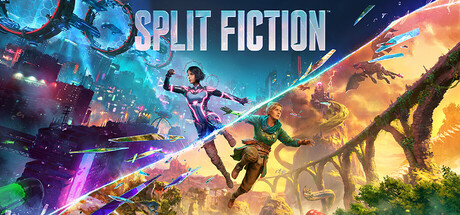
Hazelight's genre blender running at full speed: two writers trapped in each other's stories, a brand-new mechanic every twenty minutes, and the best couch night of 2025. Split Fiction isn't the deepest game we reviewed this year — it's the most generous one.
Story
Mio writes grim sci-fi; Zoe writes hopeful fantasy. A predatory publishing machine hooks both of them into a simulation to harvest their ideas, glitches, and traps them inside each other's unpublished stories. Cue a body-swap of genres: the cyberpunk parkour level is haunted by fantasy leakage, the dragon-riding idyll keeps shorting out into neon.
The character arc between the two writers — guarded cynic learns to share, sunny optimist learns to grieve — is drawn in broad, occasionally soapy strokes, and the villain is a LinkedIn post with legs. But the games-about-creativity subtext lands better than expected, and by the finale, when the two fictions start collapsing into each other, the storytelling and the level design fuse into something genuinely spectacular.
Gameplay
The Hazelight formula, perfected: every chapter hands each player a different toy — gravity boots for one, a whip for the other; shapeshifting for one, time-rewind for the other — builds one great level around the pairing, and throws it away before it can get stale. Where It Takes Two occasionally padded, Split Fiction cuts. Fourteen hours, no filler, and the optional side stories hide some of the best gags in the game (the pig level alone justified this site's existence).
Asymmetry is the engine: the game constantly manufactures situations where one player sees what the other can't, and success requires actually talking. It remains the best relationship stress test in gaming — in both directions. Split-screen is mandatory even online, because watching your partner fail their half is both tactical information and entertainment.
Friend's Pass deserves its own paragraph: one purchase, and your co-op partner plays free, cross-platform. In 2025's economy, that's not a feature, it's a statement.
Hazelight's most expensive-looking game by a mile — the sci-fi megacity and the fantasy skyworlds are legitimately gorgeous, and the constant one-off set pieces (a sandworm chase, a full top-down shooter interlude, that finale) never dip technically. Rock solid in split-screen throughout, which is quietly a huge achievement.
Craft — 9.0
Design generosity as a philosophy. Any single chapter here would be another studio's whole pitch. Docked for writing that trails the invention and a difficulty ceiling that never really rises.
Hold — 8.2
Here's the honest one: it's a 14-hour firework with almost no replay pull. A second run with roles swapped is fun but familiar. That's not damning — a great co-op campaign that ends is worth more than a mediocre one that doesn't — but the trough empties fast.
The verdict
Herd approved. Grab the person you like arguing with, one copy, one couch. Games this generous come along about once a console generation.