The short version
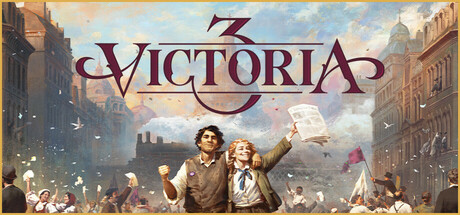
The economic grand-strategy game nobody else dares to make, finally living up to its own spreadsheet. Victoria 3 launched in 2022 as a fascinating failure — a brilliant economic engine bolted to systems that couldn't keep up — and spent four years becoming something else entirely. The version running in mid-2026, after the Sphere of Influence and Great Wave expansions and a genuine naval overhaul, is one of the most quietly absorbing strategy games on the market. This is a Re-Sniff, and it's a big one.
Story
There's no campaign, but Victoria 3 generates history better than most games write it. You take a nation in 1836 — an industrializing Britain, a fracturing Qing, a hungry Prussia, a peripheral Chile — and steer it to 1936 through economics, politics, and reform rather than pure conquest. The "story" is the arc your country traces: the moment your urban working class grows large enough to demand suffrage, the trade war that quietly bankrupts a rival, the abolition debate that splits your government. These beats emerge from the simulation, not a script, and the best of them stick with you longer than most authored plots.
Gameplay
The economy is the entire point, and it is unmatched. Every good is produced, transported, and consumed by actual population groups — pops — with needs, wealth, and politics that shift as your economy does. Build a steel mill and you create jobs; fill those jobs and you create a working class; enrich that class and you change who votes and what they demand. It's a living web where a tariff in one corner of the world ripples into a political crisis in another, and nothing else in the genre models it with this depth.
The politics layer is nearly as strong. Interest groups, laws, and agitators turn domestic reform into a genuine strategy game of its own — passing women's suffrage or dismantling serfdom against an entrenched aristocracy is as tense as any battlefield. Trade, markets, and construction round out systems that reward planners and punish drift.
For years the great hole was war, and it's the reason this game struggled at launch — combat was an abstracted, hands-off disappointment attached to the best economy in the genre. The 2026 Great Wave update did real work here: the new Ship Designer lets you customize loadouts, flagships earn prestige, and port bombardment and piracy give naval power actual teeth on the map. It's a substantial improvement. It is still not the reason to buy the game — land war remains the weakest pillar, more menu than maneuver — but the gap between "brilliant economy, broken everything else" has genuinely closed.
A gorgeous map that shifts from agrarian green to industrial grime as your nation develops, with a UI that is simultaneously information-dense and genuinely beautiful. That same UI is the barrier: this is a spreadsheet with a map, and the onboarding is brutal — expect to lose your first campaign to systems the game never adequately explains. Late-game performance also chugs once your economy sprawls across continents, though it's far better optimized than it was at launch.
Craft — 8.0
The economic and political simulation is a genuine achievement with no real competitor. Held back by a hostile learning curve and a war layer that, even after the naval work, trails the systems around it.
Hold — 8.6
Ninety-four hours across four campaigns and the "one more year" pull is as strong as anything Paradox makes. Every nation plays completely differently, the mod scene is enormous, and the free 1.14 "AI Update" on the horizon promises to sharpen the one weak opponent left. This is a game you leave installed for years.
The verdict
Herd approved, both nostrils buried in ledgers. If you bounced off Victoria 3 at launch, this is your official invitation back — the game finally caught up to its own ambition. Bring patience for the UI, and prepare to lose entire weekends to a graph going up.