The short version
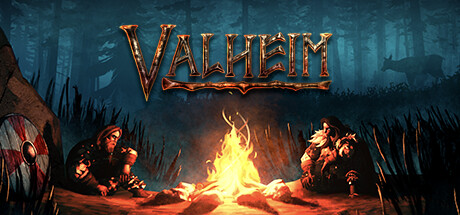
Valheim is out of Early Access, and it stuck the landing. Iron Gate's Viking survival game arrived on 9 September 2026 — five and a half years after it detonated across Steam in February 2021 — carrying the Deep North, the eighth and final biome, a new boss in Kall Fimbulbringer, 53 achievements, a simultaneous PS5 and Switch 2 launch, full crossplay, and a price bump from $19.99 to $29.99. Forty-five hours back in the Tenth World and the herd's verdict is easy: this is still the high-water mark of open-world survival craft. It's also still a game that will happily ask for six hours of hauling ore when you only had two to give.
The saga
You wake in a procedurally generated afterlife with nothing but a raven for guidance and Odin watching from somewhere in the dark. There's no quest log, no waypoint spam — the story is the map and the map is the story. Each of the eight biomes gates itself behind a boss and a metal, and every Forsaken you put down opens the next ring of the world. It's the purest version of the survival-game promise: the world doesn't explain itself, you just get better at it, and the moment you finally sail into a biome that used to kill you in nine seconds is worth more than any cutscene.
Deep North closes the loop properly. It arrives disguised as quiet snowfields and icy mesas and then reveals itself as the nastiest place in the game — snow you have to clear before you can build, frozen ponds and seas you can genuinely slip on, abandoned villages, Gammeltrolls prowling above ground and Elakingar waiting below. Iron Gate promised "over two biomes' worth" of content and it's roughly that. More importantly, it feels like a team's final exam: everything they learned across Mistlands and Ashlands is in here.
Gameplay
The systems still interlock better than anything else in the genre. Food isn't a punishment timer, it's a buff economy — what you ate this morning decides how much health and stamina you're carrying into a fight tonight. Combat is deliberate, parry-driven, and unforgiving about greed. Building is a structural-integrity puzzle you can actually see, and ten years of player longhouses prove how deep it goes. Over 40 new weapons and four armor sets come with 1.0, and the Nord crafting line gives the Deep North a real progression spine rather than a victory-lap loot drop.
Where it stumbles is the same place it always has: time. A large slice of the playerbase famously never gets past the Plains, and 1.0 doesn't fix the reason why. Ore can't be portaled, so mid-to-late progression becomes long, dull cargo runs across water. Storage and inventory management stay fiddly deep into the game. Solo, the grind is heavy enough to end a saga outright; with three or four friends splitting the labor, it's one of the best co-op experiences ever built. Which version of the game you get depends almost entirely on how many people you can get online.
That low-poly-meets-painterly look has aged into timelessness — thunderstorms with Thor's chariot crossing overhead, fog rolling off a swamp at dawn, Odin's eye glinting from a treeline. It never chased realism and it's better for it, and it runs on nearly anything.
Launch week was bumpier than the five-year wait deserved. Two hotfixes landed inside 48 hours covering armor repair in the Deep North, durability on display stands, an achievement bug and a few crashes, while players separately reported terraformed ground reverting and breaking builds, the occasional save that wouldn't convert, and vanishing loot in multiplayer. Switch 2 got the worst of it — stutter, blur, and a patch that briefly knocked it out of crossplay. Back up your world files, and if you're buying for handheld, wait a couple of patches.
Craft — 9.2
Five and a half years of iteration showing in every direction. Deep North is a genuine capstone rather than a content dump, the food-combat-building triangle is still unmatched in the genre, and the whole thing costs thirty dollars with no season pass, no deluxe edition, no paid biome pack. The half-point it loses is for the mid-game haulage grind Iron Gate has now definitively chosen not to solve, plus a launch week rougher than it needed to be.
Hold — 9.4
This is the part Valheim has always won. Forty-five hours barely scratches a full eight-biome run, and the sandbox above it is effectively bottomless — new seeds, new builds, new friends who've never seen a troll come through a wall. It's been holding a steady playerbase for five years without live-service hooks, battle passes, or FOMO events, purely because people want to go back. Nothing about 1.0 changes that except giving it a proper ending to walk toward.
The verdict
Herd approved, both nostrils, no hesitation. Valheim was a phenomenon on day one of Early Access and it leaves as something rarer: a survival game that actually finished. Grab three friends, accept that the ore is going on a boat, and go north. If you're playing alone or on Switch 2, give it a month — for everyone else, this is the best thirty dollars in the genre.