The short version
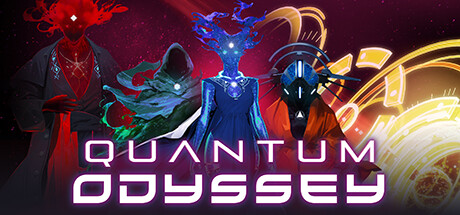
A Zachlike that teaches you to design real quantum algorithms without writing a single line of code. Quantum Odyssey, from Quarks Interactive, is one of the most genuinely ambitious things in the trough — a puzzle game that leaves you able to read quantum-computing papers and design your own algorithms. It's brilliant and it's beautiful, and it will also fight you every step of the way. This is a game for a specific kind of pig, and it makes no apology for that.
Story
There's a light science-fiction framing — a Quantum Sanctum, Sages, a futuristic realm where quantum logic shapes reality — draped over what is fundamentally an educational sandbox. Nobody should come here for narrative; the conversations and story beats are the least engaging part, and the game is honest that its real goal is quantum literacy. The framing exists to make an intimidating subject feel like an adventure, and at that job it mostly succeeds.
Gameplay
At its core you're arranging quantum logic gates to guide state through a circuit toward a target — guiding and combining "balls" along paths, matching states, and optimizing your solution. It sounds abstract because it is, but the genius is that these aren't fake puzzles dressed up as science: you are designing genuine, hardware-ready quantum algorithms, and the game name-drops the real ones (yes, Shor's algorithm shows up). Over 500 optimization challenges, a level editor, and the ability to hack and solve other players' creations give it Zachlike bones with near-infinite ceiling.
When it clicks, it's extraordinary. The problem — and reviewers keep circling the same one — is how it teaches. The tutorials lean on walls of text delivered at a crawl, and the concepts often aren't made intuitive so much as explained at length. The early puzzles are approachable through trial and error, but once the number of possible gate interactions explodes, that experimental approach collapses and you're sent back to slog through those ponderous tutorials to find what you missed. The difference between loving and bouncing off this game is almost entirely your appetite for that friction.
Gorgeous and unmistakably high-budget for the genre — a sleek, futuristic interface, slick intro cinematics, and a presentation that sells "advanced technology" from the first menu. Fair criticism exists that the flash sometimes comes at the expense of clarity: some of that cinematic polish could have gone into making the interface and concepts more legible. It wants a Vulkan-capable GPU and runs well on modest hardware otherwise.
Craft — 8.2
As a piece of design ambition it's close to unique — real quantum computing, made playable, with a genuinely deep toolset. Held back squarely by its teaching layer: the text-heavy tutorials and steep, sometimes opaque curve are the barrier between this game and greatness.
Hold — 7.6
Twenty-three hours and we've cleared a fraction of the 500+ challenges, with the level editor and player puzzles promising far more. The ceiling is enormous — but so is the mental energy each session demands, and that keeps it a "few puzzles at a time" game rather than a binge. The developer's talk of ranked "quantum eSports" tournaments could extend that hold considerably if it lands.
The verdict
Herd approved, both nostrils crackling with static. If you're a puzzle lover who's ever been quantum-curious, there is nothing else like this and it's an easy recommendation — go in knowing it's as much a course as a game, and pack patience for the tutorials. If you want a puzzler that gets out of your way, this isn't it. For the right pig, though, it's a genuine one-of-a-kind.
Disclosure: We recieved free review copy of this product from https://www.keymailer.co