The short version
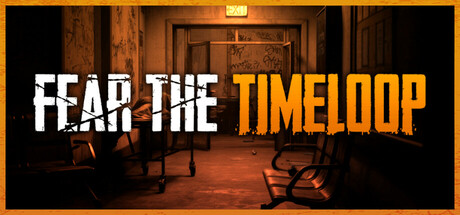
Sheriff James Cooper wakes up bleeding out in an abandoned hospital with fifteen minutes on the clock. Die, and the loop resets — but you keep your memory, your map knowledge, and (if you were smart) whatever you stashed before the timer ran out. Fear The Timeloop wears its Resident Evil 2 inspiration so openly it borders on cosplay, and it has the bugs of a small studio's budget to match. And yet the loop conceit does something most survival horror doesn't: it makes dying feel like the plan working, not the plan failing.
Story
You're chasing a serial killer and wake up gravely wounded in Saint Heritage Hospital with no memory of how you got there. Deputy Rose Watters is the only voice keeping you company over the radio, and every loop peels back another layer of what actually happened here — cultist-adjacent figures stalking the halls, VHS tapes that double as lore drops and checkpoints, and a slow-burn mystery that rewards paying attention across resets rather than in any single run. It's pulpy B-horror in the best way, and the fifteen-minute frame gives even simple exposition dumps a ticking-clock urgency other horror games have to manufacture some other way.
Gameplay
The hook is the hook: a wristwatch countdown instead of a health bar, and when it hits zero — or a monster finishes you off early — you're back at the start with your knowledge intact but your inventory dumped unless you stashed it first. That single rule reframes the whole genre. Early loops are short, panicked sprints where you're just trying to survive long enough to learn the floor plan. Later loops turn into speedruns where you already know which door hides a shortcut and which hallway hides the guy with the axe, and the game trusts you to route-plan instead of babysitting you with markers.
The rest is straight-up Resident Evil 2 homage: over-the-shoulder combat, an inventory you have to manage with real discipline, safe-room saves, elaborate lock puzzles that gate progress behind items you're actively hunting for. None of it is trying to hide its influences, and it mostly earns the comparison — the level design around the hospital's main hall is genuinely well-built. Where it stumbles is combat feel: weapon switching under pressure is stiff, melee timing with the baton takes longer to click than it should, and we caught ourselves clipping into doorways and, on one memorable occasion, a zombie, more than once. It's an indie budget, and it shows exactly where you'd expect.
Lighting and environment design are doing the heavy lifting here, and they're doing it well — every hallway in Saint Heritage earns its dread through shadow and sound rather than jump scares, and the ambient audio design knows when to go quiet and let the silence do the work. It's not a technical showcase, and the seams show under scrutiny (texture pop-in, the odd clipping bug, animations that don't always land), but the atmosphere carries more weight than the fidelity, and that's the right trade for the budget this was clearly made on.
Craft — 7.3
A genuinely clever central mechanic wrapped around combat and traversal that never quite matches its ambition. The loop system alone is worth the price of admission; the execution around it — stiff weapon handling, the occasional clip through geometry — keeps this from climbing higher.
Hold — 7.5
Nine hours got us through the full mystery, and the loop structure meant almost none of it felt like backtracking for its own sake — every repeat run existed to get us somewhere new. It's a short trip by design, and it doesn't overstay its welcome, which we mean as a compliment. Once the mystery's solved, there isn't a strong pull to go back in, but for a five-to-nine-hour indie horror game at this price, that's a fair trade.
The verdict
A Middling Snout that's closer to Herd Approved than the number suggests. Fear The Timeloop knows exactly which classics it's borrowing from and isn't shy about it, but the countdown mechanic is a genuinely fresh idea bolted onto a familiar frame, and it mostly works. If you've got a soft spot for RE2-style survival horror and don't mind some indie rough edges, this is a cheap, tense weekend well spent.