RPG Jul 17, 2026
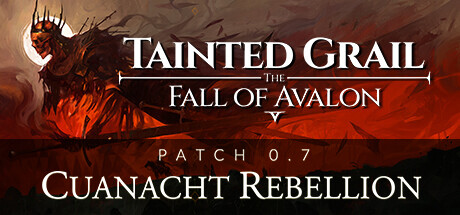
Tainted Grail: The Fall of Avalon
A small Polish studio built a Skyrim-shaped world out of rotting Arthurian myth — and the exploring is so good you'll forgive the combat. Mostly.
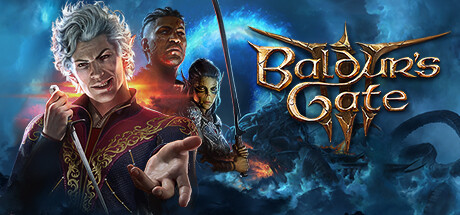
The rare hundred-hour RPG where every hour respects your time. We tried to break the story in every way we could think of — killing quest-givers, siding with villains, skipping entire regions — and the game not only allowed it, it had written, voiced dialogue waiting for us on the other side. This is the new bar for the genre, and it was set without a single microtransaction in sight.
You wake up on a crashing nautiloid ship with a mind flayer tadpole behind your eye, and the game's first miracle is that this body-horror premise turns into one of the warmest character stories in the genre. The three-act structure moves from wilderness survival to a cursed shadowland to the sprawling city of Baldur's Gate itself, and each act has a distinct personality — act one is an open sandbox, act two is a slow-burn horror story, act three is pure density, packing more optional content into one city than most RPGs fit in a whole game.
The companions carry it. Every one of them is playable as your own protagonist, and the Dark Urge origin — a custom character with a blood-soaked past the game slowly reveals — is quietly the best way to play. On our second run, scenes we thought we understood turned inside out. Astarion's arc alone is better written than most full games.
Turn-based combat built on the D&D 5e ruleset sounds dry on paper. In practice it's a physics sandbox wearing a rulebook as a disguise: shove an ogre off a cliff, ignite a grease puddle with a fire bolt, throw your own halfling at the problem. Every encounter has three solutions the designers planned and two they didn't, and the game's willingness to say "yes" to nonsense is its greatest gameplay achievement.
Out of combat, the dice keep rolling. Skill checks in dialogue are staged like little theater moments, and failing them is often funnier and more interesting than succeeding. Stealth, disguise spells, speaking with the dead, speaking with animals — every system is a lockpick for the story, and the game never punishes curiosity.
The cinematic presentation is unreasonable for a game this reactive. Performance-captured companions react to choices you made forty hours ago with the right mix of hurt and history, and the camera work in ordinary conversations puts most linear story games to shame.
The honest asterisk: act three still asks a lot of older hardware. Patches have smoothed the worst of it, but the city's density comes with frame dips and longer loads on aging rigs. It never stopped us playing; it occasionally reminded us we should upgrade.
Systems this deep usually creak when they touch. Here, mining the rulebook, the physics, and the writing against each other is the whole point, and it almost never breaks. Half a nostril withheld for act-three performance and an inventory system that remains a part-time job.
We finished one run at 92 hours and immediately started a second as the Dark Urge — and act one felt like a different game. Between origin characters, twelve classes, an honour mode that permanently deletes cowards, and genuinely divergent story branches, the herd will still be rooting through this one in five years.
Buy it. Clear a month. Tell your friends you moved. Both nostrils, fully engaged — this is the best RPG of its generation and it isn't a close race.
Fresh verdicts the herd sniffed out recently.
A small Polish studio built a Skyrim-shaped world out of rotting Arthurian myth — and the exploring is so good you'll forgive the combat. Mostly.
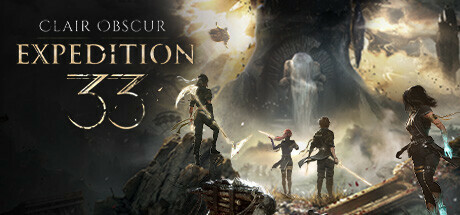
A debut studio walked up to the JRPG genre, painted over its dustiest rules, and delivered the best turn-based combat in years wrapped in a story that hurts.
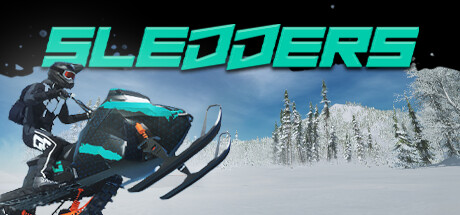
A freeride snowmobile simulator whose deep-snow physics are the most honest thing about it: gloriously immersive when they click, exhausting when they do not. Beautiful, moddable, and short on things to actually do.
One email a week. New reviews, no slop.